Wednesday, February 23, 2011

Introducing new, even lower interest rates on all CEC loans

We are very happy to announce that all Banner Bank loans for Community Energy Challenge projects now have interest rates between 1.00%-3.00% for individuals1 and 1.50%-3.00% for businesses2.

As a key element of making energy efficiency accessible, affordable and easy, the Community Energy Challenge provides preferential term financing through the use of a loan loss reserve fund. Using a grant from the American Recovery and Reinvestment Act (ARRA), the CEC was able to buy down interest rates on loans for energy efficiency improvements through our partner Banner Bank. This provides participants with an exceptionally cost-effective way to finance their projects and extends financing to those who might not otherwise be eligible, reducing the interest paid by borrowers.

Thursday, February 3, 2011

City of Bellingham offers water saving rebates

The Community Energy Challenge and the City Water Conservation Program have teamed up to offer rebates to city water customers participating in the CEC. The rebates, up to $150, apply to certain water conserving fixtures, drip irrigation systems, or rainwater catchment systems. They are intended to make it easier for participants to save water as they save energy and to educate about the relationship between the two. “Pairing these two programs recognizes the important link between energy and water use,” said Anitra Accetturo, Water Conservation Specialist. “Conserving water conserves energy, and conserving energy conserves water,” said Accetturo.

Case in point, a recent study looking at the energy used by the city’s water and wastewater treatment systems found that for every 100 cubic feet of city water that is saved, $0.37 in energy and chemical costs are saved. As Bellingham works to meet the state mandate of a fully metered water system, homeowners reducing their water use can benefit from lower water bills and help reduce the energy and chemical costs associated with supplying drinking water.

For more information about the rebate program, contact Andrea at AHood@cob.org.

Thursday, January 13, 2011

Breaking down barriers to efficiency


With all of the focus on developing new energy sources to reduce American dependence on finite foreign fossil fuels it’s easy to forget that there is an easy, inexpensive, emissions-free way to increase energy availability: energy efficiency. The beauty of efficiency is that on some level we all have individual control over it; anyone who has saved money by turning down their heater thermostat can attest to this. On a national scale, it is estimated that the US could reduce energy consumption by 23% across all sectors by implementing a comprehensive efficiency strategy.

Friday, January 7, 2011

CEEP legislative report highlights CEC and similar programs

A report on Community Energy Efficiency Pilot (CEEP) programs released last month by the Washington State University (WSU) Extension highlights the efforts of the Community Energy Challenge and seven other Washington State energy efficiency programs to develop innovative ways to provide services to their communities. All of the programs highlighted in the report received grants administered by WSU and funded through the American Recovery and Reinvestment Act (ARRA) with the mandate to "develop and implement pilot programs providing community-wide urban residential and commercial energy efficiency upgrades."

The legislature set forth the following goals for participating programs:

– Increase public outreach on energy efficiency.
– Grow the retrofit industry and workforce with family-wage jobs.
– Expand delivery of energy efficiency services and incentives to those immediately above low-income thresholds.
– Test whole neighborhood approaches and other innovative approaches.
– Provide creative energy efficiency financing options.

The Community Energy Challenge is highlighted for creating local jobs and the report includes a quote from a participating contractor who said "I would likely not be in business without the Community Energy Challenge." Another quoted contractor credits the work generated by the CEC with allowing him to hire two new employees. The report also mentions North Fork Brewery, a local business that has saved an average of 7.5 percent of their energy costs with recommendations made by the CEC and is in the process of installing solar panels.

Other pilot programs include City of Ellensburg, Clark Public Utilities, Puget Sound Energy & UCONS L.L.C., Snohomish County Public Utility District, Sustainable Living Center, SustainableWorks, and Thurston County Economic Development Council.

Monday, November 22, 2010

The case for solar power in Washington

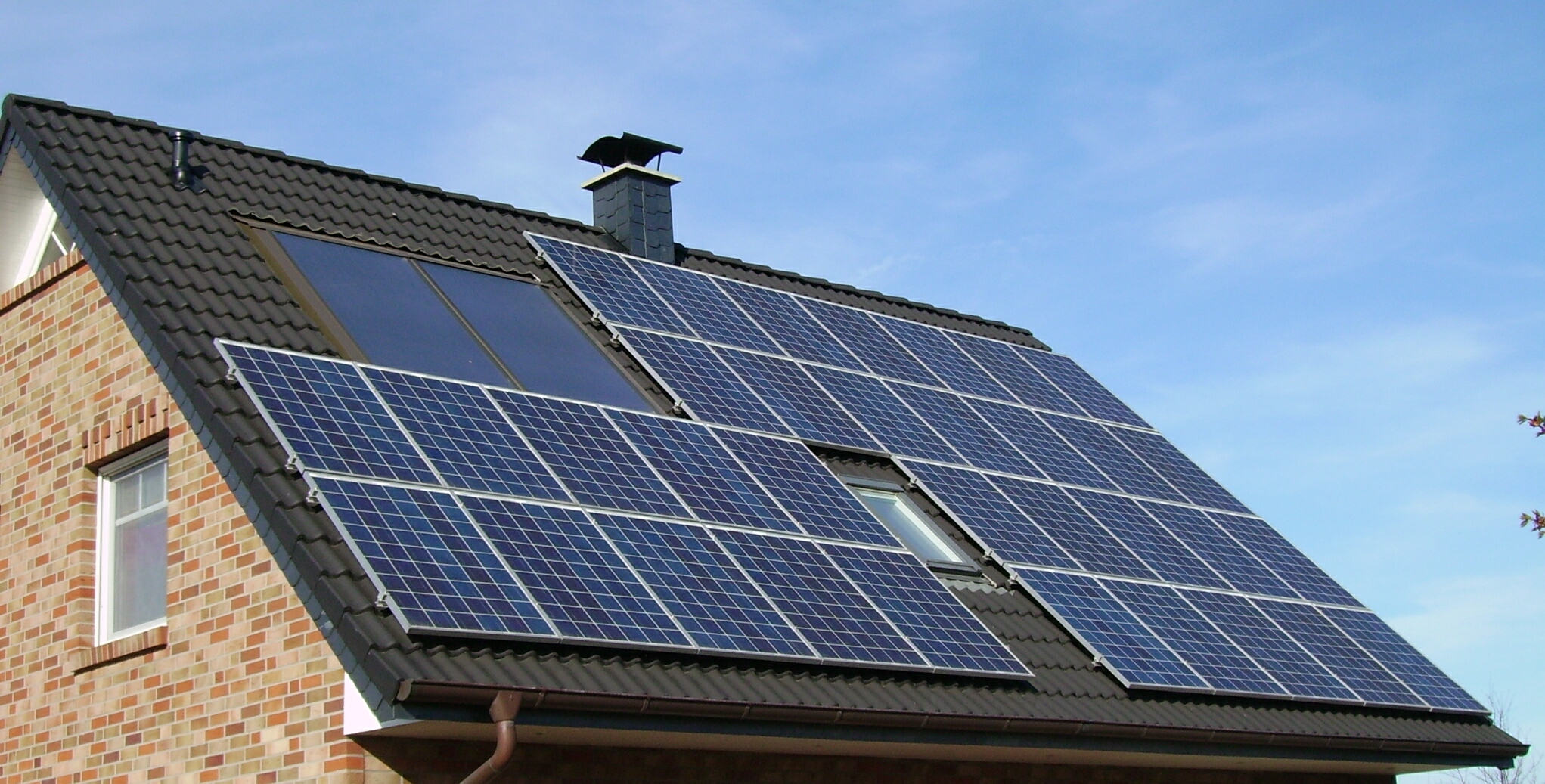
Solar power isn’t exactly the first thing you think of when you think of Western Washington, but the truth is that we receive 70% of the solar energy that the best locations in the United States receive and have a lot of potential to harness solar for our homes and businesses. Due to a policy called net metering, if a building produces more energy than it uses during a long summer day that energy can go into the local grid for other consumers to use. The building owner is credited for the extra energy they generated, which allows them to withdraw an equivalent amount of energy during a cloudy day at no extra charge. Since a large percentage of our solar potential is available in the summer, this policy allows buildings with their own photovoltaic panels to take advantage of the cost savings all year.

On November 17th, over 50 representatives from local businesses gathered at Sustainable Connections for a Solar Power Happy Hour. Attendees learned how the Community Energy Challenge can help them take advantage of current financial incentives and tax credits to buy down the cost of solar projects and representatives from three local installers offered a 5% discount to businesses that attended the event. Current incentives make solar more affordable than it’s ever been and some businesses are finding that adding solar panels offers a good return on their investment.

Everyone at the event enjoyed a selection of beers from North Fork Brewery, a local restaurant that is in the process of installing a solar array with the goal of providing 100% of the establishment’s power.

Thursday, November 11, 2010

The CEC is Creating Jobs - We're Hiring!


Energy efficiency is creating and sustaining jobs in an industry that has been hit hard by the recession. The Community Energy Challenge is one of many programs across the country putting the building industry back to work and helping transition into a greener economy. To date, the CEC has been responsible for the creation of more than a dozen full time positions and is helping contractors to gain valuable skills in the field of energy efficiency, which will continue to serve them and our community long after the economy pulls out of this slump.

The Opportunity Council has recently put out a request for qualifications to local contractors interested in joining the team of contractors qualified to carry out work for residential participants in the CEC.
If you're a local contractor interested in helping Whatcom residents save money and energy, check out the link to learn how to apply.

Thursday, October 28, 2010

October 30th is Weatherization Day!


October is Energy Awareness month and the federal, state, and local governments have been working to highlight the actions that are making our country more energy efficient. To this end, Washington State Governor Christine Gregoir has named October 30th 2010 as “Weatherization Day” to celebrate and highlight the many successful energy efficiency programs in our state.

Washington’s Weatherization Assistance Program for low-income residents, in place since 1987, has long been considered an important part of our state’s efforts to address poverty issues. Since its inception, over 125,000 homes have received services, reducing energy bills and increasing comfort and safety in those households that are most in need.

Thanks to funding from the American Recovery and Reinvestment Act of 2009 (ARRA), many government agencies and non-profit organizations have received grants to help make these services affordable to an even larger percentage of the population and to raise awareness about the benefits of energy efficiency for homes and businesses. The Community Energy Challenge is proud to be a part of the effort to make Whatcom County a leader in energy efficiency!

Read the Proclamation here.